
Standing on the Shoulders of Giants
Freud, Jung, and Adler
Through the Illumination Transformation Lens
There are three names that shaped everything we understand about the human mind.
Between them, they laid the foundations of modern psychology. They sat with broken, confused, suffering human beings and asked questions nobody had asked before. “Why do we behave the way we do? What drives us? What wounds us? And what heals us?”
They didn’t agree on everything. In fact, they famously disagreed. Jung and Adler both eventually broke from Freud because they believed he was missing something fundamental. That tension between their ideas is, we believe, one of the most important gifts they left us.
Because it means there is no single answer.
There is no one-size-fits-all explanation for why you are the way you are, or why the abuse happened, or why it has affected you so deeply.
At Illumination Transformation, we don’t ask you to pick a framework and follow it blindly. We offer you all three because one of them will resonate with you in a way that changes everything. And understanding why it resonates is itself an act of healing.
These frameworks were written in a different era. The world has changed in ways these brilliant minds could never have anticipated. But the core truths they discovered? They are as relevant today as the day they wrote them.
Let us show you why.
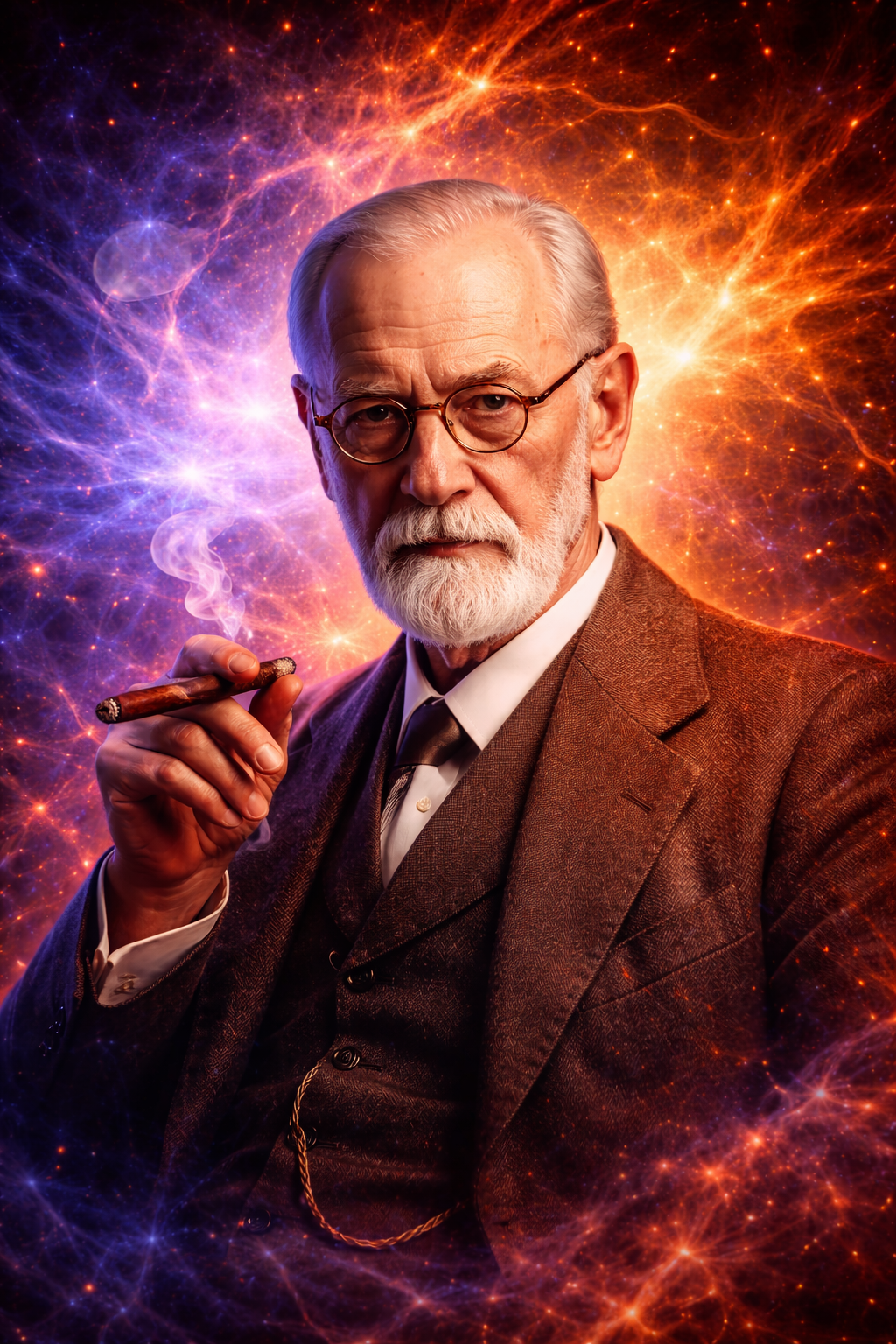
Sigmund Freud
The Unconscious Architect
Who Was Freud?
Sigmund Freud was an Austrian neurologist working in Vienna in the late 1800s and early 1900s. He is widely considered the father of modern psychology. His central argument was radical for his time: most of what drives our behaviour is unconscious. We don’t know why we do what we do. We think we do, but beneath the surface, invisible forces are running the show.
He proposed that the mind operates in three layers:
Layer
What It Is
The Conscious Mind
What you're aware of right now
The Preconscious Mind
Memories and knowledge just below the surface
The Unconscious Mind
Hidden drives, repressed memories, buried wounds
He also described three parts of the personality:
Part
What It Does
The Id
Pure instinct - wants pleasure, avoids pain, demands immediate satisfaction
The Ego
The rational, realistic part that mediates between the Id and the real world
The Superego
Your internalised moral compass — shaped by parents, culture, and authority
How Does Freud Apply to Narcissistic Abuse?
Freud was writing about unconscious patterns playing out in small, intimate circles, families, marriages, close relationships.
He couldn’t have imagined a world where those patterns are now amplified through technology.
Today, the love-bombing phase, the overwhelming affection designed to hook you, doesn’t just happen in person. It happens through constant messaging, social media attention, being tagged and praised publicly, having someone appear to be obsessed with you across every platform you exist on.
The withdrawal phase, the sudden coldness, the silent treatment, now includes being blocked, unfollowed, or ignored on every digital platform simultaneously. Being digitally erased by someone you love is a modern form of psychological punishment Freud never had a name for.
And the unconscious repetition compulsion? It’s now being fed by algorithms. The platforms that keep you scrolling are the same ones that kept you checking whether they’d liked your photo, whether they’d seen your message, whether the blue ticks had turned to read receipts.
The pattern is Freudian. The tools are 2026.
The Freud 2026 Reality Check
Freud was writing about unconscious patterns playing out in small, intimate circles, families, marriages, close relationships.
He couldn’t have imagined a world where those patterns are now amplified through technology.
Today, the love-bombing phase, the overwhelming affection designed to hook you, doesn’t just happen in person. It happens through constant messaging, social media attention, being tagged and praised publicly, having someone appear to be obsessed with you across every platform you exist on.
The withdrawal phase, the sudden coldness, the silent treatment, now includes being blocked, unfollowed, or ignored on every digital platform simultaneously. Being digitally erased by someone you love is a modern form of psychological punishment Freud never had a name for.
And the unconscious repetition compulsion? It’s now being fed by algorithms. The platforms that keep you scrolling are the same ones that kept you checking whether they’d liked your photo, whether they’d seen your message, whether the blue ticks had turned to read receipts.
The pattern is Freudian. The tools are 2026.
This Framework Might Be For You If…
You find yourself repeatedly drawn to the same type of person – emotionally unavailable, hot and cold, charming but unreliable
Your relationship with a parent was unpredictable – loving sometimes, cold or critical other times, and you spent your childhood trying to earn consistent love
You struggle to understand why you stayed, or why you still miss someone who hurt you deeply
You find yourself replaying conversations and interactions, trying to make sense of what happened
You feel like there’s something underneath your anxiety or depression that you haven’t been able to name yet
Carl Jung
The Shadow and the Light
Who Was Jung?
Carl Jung was a Swiss psychiatrist who began as Freud’s most celebrated protégé – before breaking from him entirely. Where Freud saw human behaviour as primarily driven by repressed sexual and aggressive instincts, Jung believed something far larger was at play.
Jung argued that we are not just shaped by our personal histories. We are connected to a collective unconscious, a shared layer of human experience containing universal patterns, symbols, and archetypes that exist across all cultures and all time.
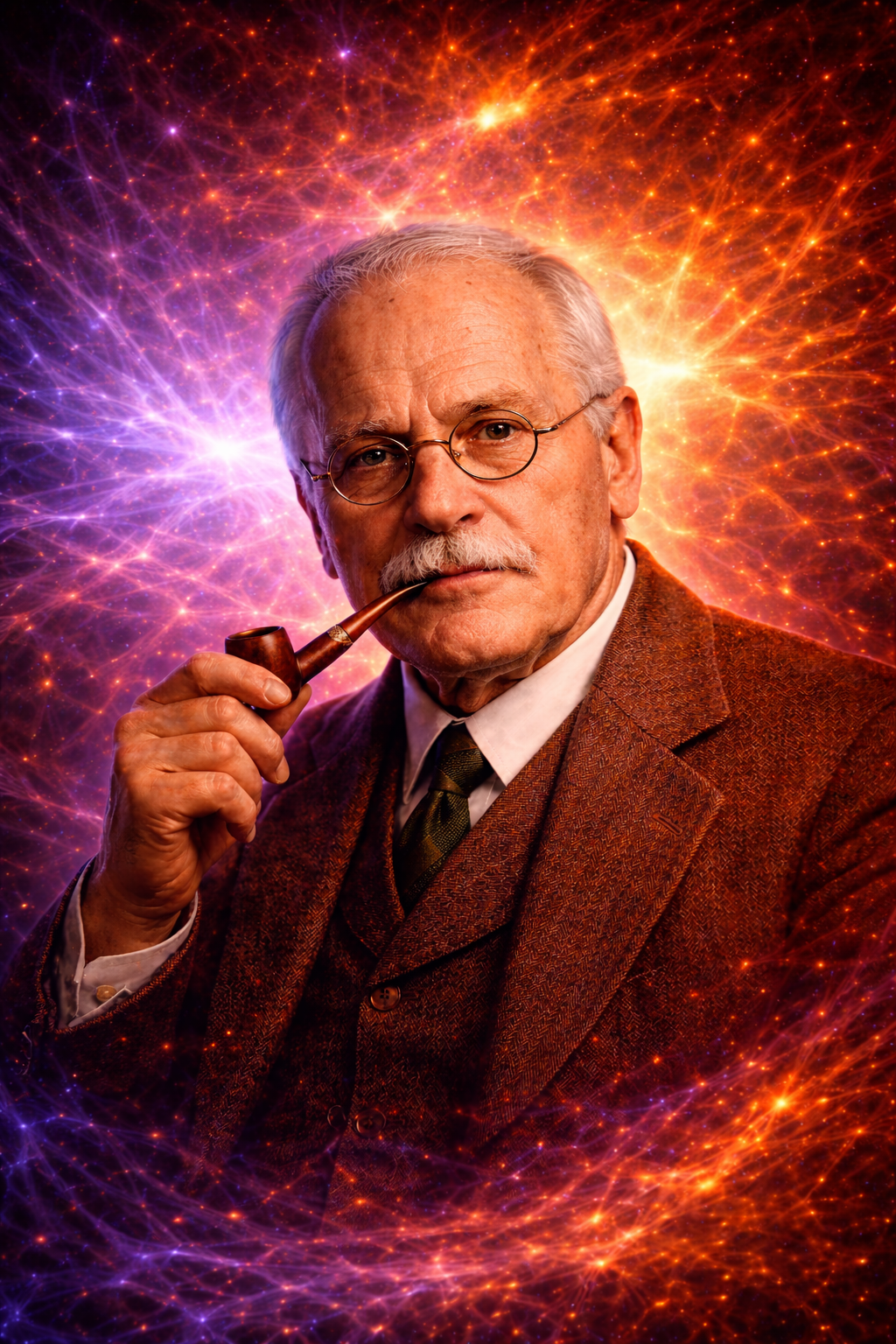
He also developed one of the most powerful and practical concepts in all of psychology: the Shadow.
Concept
What It Is
The Collective Unconscious
A shared layer of human experience beneath the personal unconscious
Archetypes
Universal patterns or characters that appear across all cultures
The Shadow
The parts of yourself you've hidden, suppressed, or been shamed out of
Integration
The process of accepting and reclaiming your Shadow
How Does Jung Apply to Narcissistic Abuse?
Jung’s most important gift to narcissistic abuse survivors is the concept of the Shadow, and it works in two powerful directions.
First — the abuser's Shadow.
Narcissistic behaviour is, at its core, a refusal to integrate the Shadow. The narcissist has constructed a false self – a carefully curated image of perfection, superiority, and control. Everything that threatens that image – vulnerability, imperfection, failure, shame – is buried in their Shadow.
And here is the critical part: what we bury in the Shadow doesn’t disappear. It gets projected onto the people closest to us.
This is why you became the problem. The narcissist couldn’t face their own shame, their own inadequacy, their own fear – so they projected it onto you. You became the embodiment of everything they couldn’t look at in themselves.
Your “sensitivity” was actually their inability to handle emotion. Your “neediness” was actually their terror of genuine intimacy. Your “irrationality” was actually their refusal to be accountable.
You weren’t those things. You were carrying their Shadow.
Second — your own Shadow.
Survivors of narcissistic abuse – particularly those who experienced it in childhood – often have a deeply buried Shadow of their own. Not because they’re broken. But because they were systematically shamed out of their wholeness.
Your voice was too loud, so you buried it. Your anger was too threatening, so you suppressed it. Your confidence was dangerous, so you dismantled it. Your needs were “too much”, so you pretended you didn’t have them.
Jung would say: those aren’t gone. They’re waiting. And the work of healing is not fixing what’s broken, it’s reclaiming what was buried.
The Illumination Transformation Superpower Series is, at its heart, Jungian integration. Every “survival strategy” we reframe as a strength, the hyper-vigilance, the people-pleasing, the shape-shifting – is us helping you reclaim your Shadow. Bringing the buried parts back into the light where they belong.
That’s what our name means. Illumination. Bringing light to the parts that have been kept in darkness.
The Jung 2026 Reality Check
Jung wrote about the false self as an internal construct, a mask worn in intimate relationships.
In 2026, the false self has a platform.
Narcissists now curate entire personas across social media – perfectly filtered images, inspirational captions, public displays of the generous, loving, brilliant person they want the world to believe they are. They build audiences. They cultivate admiration from hundreds, thousands, sometimes millions of people who have no idea who they actually are behind the screen.
This is the narcissist’s Shadow management at an unprecedented scale. The curated Instagram life is the false self made public. And when you – the person living with them behind the screen, try to speak your truth, you’re not just fighting one person’s denial. You’re fighting their entire curated public image.
Who is going to believe you when everyone online thinks they’re wonderful?
Jung never had a name for that. We do. Digital Shadow projection. And it is one of the most sophisticated and devastating tools of modern narcissistic abuse.
This Framework Might Be For You If…
You feel like pieces of yourself have gone missing – your confidence, your voice, your sense of who you are
You notice you have strong, sometimes disproportionate reactions to certain types of people – particularly those who display arrogance, neediness, or entitlement
You were told as a child or as an adult that your emotions, needs, or opinions were “too much”
You struggle with your own anger – either you never feel it, or when it comes out, it frightens you
You feel like you’ve been living as a smaller version of yourself for years and can’t quite find your way back to who you were
You were made to feel responsible for someone else’s emotional state – their happiness, their rage, their pain
Alfred Adler
The Significance Seeker
Who Was Adler?
Alfred Adler was an Austrian physician who, like Jung, began in Freud’s circle before developing his own profoundly different framework. Where Freud focused on the unconscious and Jung on the collective psyche, Adler turned his attention to something more immediate and human: our need to feel significant.
Adler argued that the primary driver of human behaviour is not sexual instinct or archetypal patterns – it is the need to belong and to matter.
He observed that all human beings begin life in a state of helplessness and dependency. We are small. We are vulnerable. We are completely reliant on others. And that early experience of being less than – of needing others to survive – creates what Adler called the inferiority complex.
Not a pathology. A universal human experience.
The question, Adler said, is not whether you feel inferior. Everyone does, in different ways.
The question is: how do you compensate for it?
Concept
What It Is
Inferiority Complex
The universal feeling of being small, inadequate, or less than others
Striving for Superiority
The drive to overcome feelings of inferiority through achievement, control, or power
Social Interest
The natural human drive toward connection, contribution, and community
Lifestyle
The unique pattern of beliefs and behaviours each person develops to navigate life
Birth Order
The influence of your position in the family on your personality and coping style
How Does Adler Apply to Narcissistic Abuse?
Adler is, in many ways, the most immediately practical of the three for understanding narcissistic abuse, because he explains both sides of the dynamic simultaneously.
Understanding the abuser through Adler:
Narcissistic behaviour, through an Adlerian lens, is the most extreme expression of an unresolved inferiority complex.
Beneath every narcissist is a person who, at some point, usually in childhood – felt profoundly insignificant. Unseen. Unworthy. Powerless.
And rather than working through that wound, they constructed an elaborate compensation strategy: control. “If I control everything around me” – the narrative, the people, the environment – I never have to feel small again.
The need to dominate, manipulate, isolate, and diminish those closest to them is not strength. It is the most sophisticated defence system a wounded person can build.
This doesn’t excuse the behaviour. But it explains it.
And when you understand it – when you see the terrified, insignificant child behind the controlling adult – it changes something. Not into sympathy that keeps you trapped. But into clarity that sets you free.
Because you stop thinking there is something uniquely wrong with you, and start seeing the mechanism that was operating all along.
Understanding the survivor through Adler:
Here is where Adler becomes genuinely transformative for survivors.
You were told you were insignificant. That your needs didn’t matter. That your voice was inconvenient. That your presence was a burden.
But Adler would say: look at what you built from that.
The empathy you developed to navigate someone else’s unpredictable emotions. The intelligence you built to read rooms and predict danger. The resilience you cultivated simply by surviving. The fierce protectiveness you feel toward others who are vulnerable.
These aren’t coincidences. These are compensations — and they are extraordinary.
Adler believed that our greatest strengths are almost always built directly on top of our deepest wounds. The child who was told they were stupid becomes the most determined student. The person who was made to feel invisible becomes the most perceptive observer in the room.
You are not broken. You are compensating in ways that are genuinely brilliant.
And here is the ultimate Adlerian story – the one that is at the heart of everything Illumination Transformation stands for:
The Cycle Breaker.
The person who takes everything they endured – the pain, the confusion, the wounds, and transforms it into purpose. Who uses their experience not just to heal themselves, but to protect others, to break patterns, to change the story for the generations that come after them.
That is Adler’s striving for superiority in its most beautiful, most powerful form. Not dominance over others. But the mastery of your own story.
The Adler 2026 Reality Check
Adler’s inferiority complex and striving for significance are ancient, universal human dynamics.
But in 2026, the significance wound has been weaponised by technology in ways Adler never imagined.
Social media has created an entirely new economy of significance – one built on likes, followers, views, comments, and algorithmic validation. And for someone with a deep, unresolved inferiority complex, this is not just appealing. It is addictive in the most clinical sense of the word.
The narcissist who once needed a small circle to dominate now has an audience. Every post is a hit of significance. Every follower is a validation. Every comment is proof that they matter.
And the coercive control that Adler would have recognised in intimate relationships now has digital tools:
A parent who controls through significance can now monitor a child’s social media, control their online presence, publicly humiliate them to their entire peer network, or use the child’s digital dependency as a weapon – taking their phone, their access, their connection to their world.
A partner who controls through financial manipulation now has instant access to joint accounts through banking apps, can freeze cards in real time, can monitor spending to the cent, can weaponise financial dependency with a few taps on a screen.
Adler understood the wound. He couldn’t have imagined the toolkit.
This Framework Might Be For You If…
You grew up feeling like you never quite mattered, that your achievements were never enough, your presence was never celebrated
You find yourself driven to achieve, to prove yourself, to be successful, but no amount of success ever quite fills the emptiness
You struggle deeply with feeling significant – either desperately seeking validation or completely disconnecting from your own needs
You were given a role in your family – the responsible one, the peacekeeper, the scapegoat, the invisible one, and you’re still playing it
You feel a powerful drive to make a difference, to help others, to create something meaningful from your experience
You are ready to stop surviving and start building something extraordinary from everything you’ve been through
How They Work Together in Illumination Transformation
Here is the beautiful truth: you don’t have to choose.
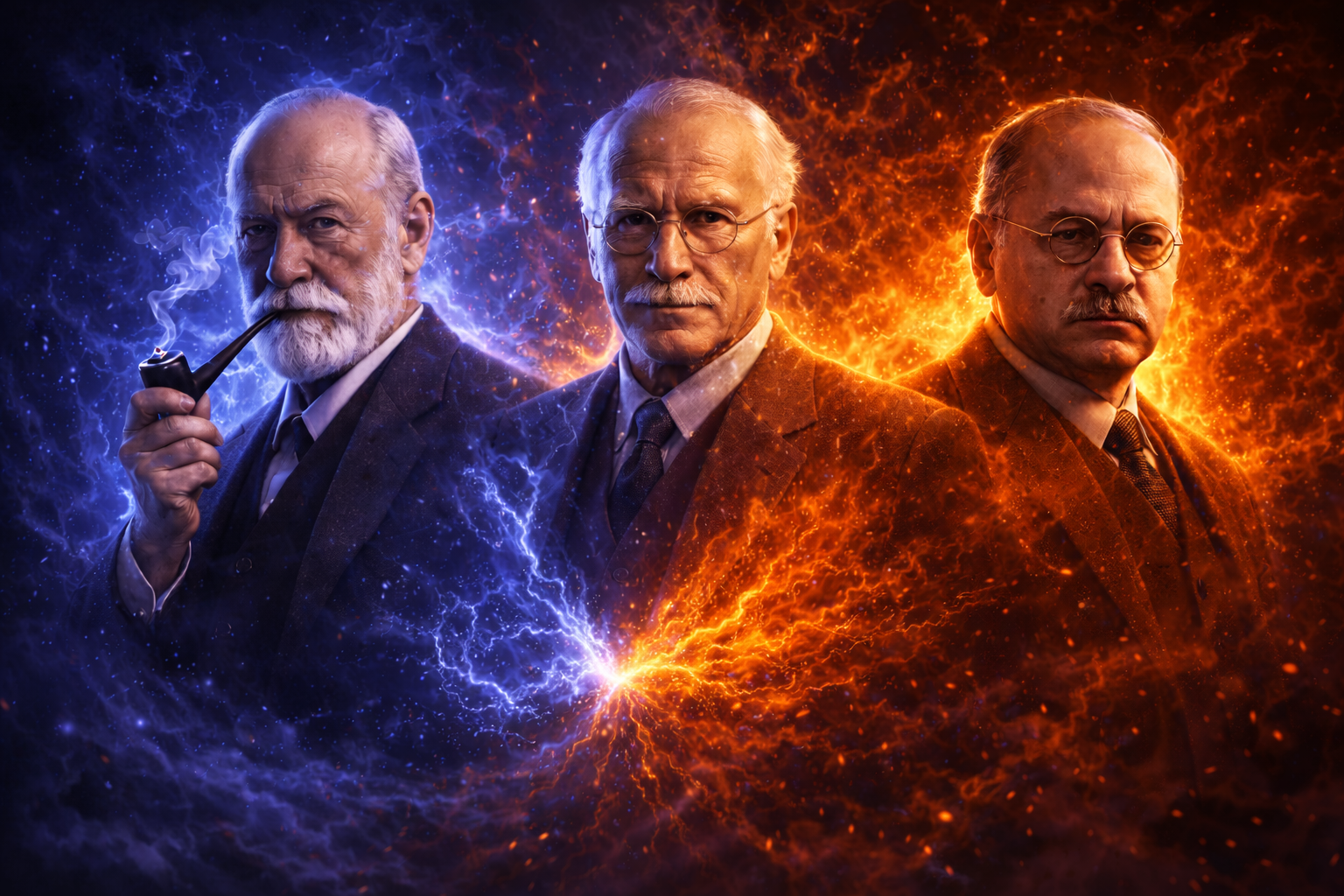
Freud, Jung, and Adler weren’t competing. They were circling the same extraordinary mystery from different angles, and each one illuminated something the others missed.
At Illumination Transformation, we use all three, because different survivors need different lenses, and different moments in your healing journey will call for different frameworks.
The question, Adler said, is not whether you feel inferior. Everyone does, in different ways.
The question is: how do you compensate for it?
Framework
What It Helps You Understand
Freud
The unconscious patterns driving your relationship choices
Jung
The parts of yourself that were buried or projected onto you
Adler
The wound beneath the behaviour — yours and theirs
Used together, these frameworks don’t just explain what happened to you. They show you the full picture – the roots, the mechanism, the impact, and the potential.
Freud shows you the pattern. Jung shows you what was lost. Adler shows you what you can build.
A Note on These Frameworks and Our World Today
These three men were geniuses. We say that without hesitation and without irony.
But they were also writing in a world that looked nothing like ours.
Freud was working in Victorian Vienna, where psychological wounds played out in drawing rooms and consulting couches. Jung was exploring the collective unconscious in an era before mass media. Adler was writing about inferiority and significance in a world where your social circle was measured in dozens, not millions.
They could not have anticipated a world where:
Coercive control can be exercised through a smartphone from the other side of the planet
Financial abuse can happen in real time through banking apps
Narcissistic supply can be sourced from thousands of followers instead of a small intimate circle
A child’s entire social world – their friendships, their identity, their sense of belonging – exists on a screen that can be taken away as punishment
The false self can be broadcast to millions through a carefully curated feed
Gaslighting doesn’t just happen in conversation – it happens through screenshots, deleted messages, and public posts designed to rewrite history
The mechanisms these men identified are timeless. The tools being used to enact them are brand new.
And that is precisely why the world needs Illumination Transformation.
Not to replace these brilliant frameworks. But to apply them honestly and courageously to the reality of what survivors are actually living through right now in 2026, with a smartphone in their pocket and a world that has never been more connected, and in some ways, never more dangerous.
We stand on the shoulders of these giants. And from up here, we can see further than they ever could.
Which Framework Resonates With You?
You don’t need to know the answer right now. Just notice which section you read most slowly. Which examples made you stop and read them again. Which questions at the end made your stomach tighten with recognition.
That’s your entry point.
And wherever you begin, whether it’s Freud’s patterns, Jung’s Shadow, or Adler’s significance wound, Illumination Transformation will be here to walk you through it.
Understanding first. Everything else follows.
The Healing Hub is built for you – survivor, family member, someone who just needs to make sense of it. Every piece is free. Every piece is waiting.